Ceiling
A ceiling leak in an NYC apartment almost never starts in the apartment where you see it. It starts in a bathroom upstairs, a washing machine hose, a radiator valve, a riser in the wall or the top of the building, and gravity does the rest. This page takes you through the first hour, who to tell, what not to do under a wet ceiling, and how a proper repair dries the cavity before anyone picks up a paintbrush.
NYC Water Damage Repair is an independent referral service, not a restoration company. When you send the form, your details go to an independent local restoration provider serving New York City, who can contact you, inspect and quote any work directly. You decide whether to hire them.
Water dripping from the ceiling right now
Work through these in order. None of them needs tools, and each one limits the damage.
- Go upstairs. Knock on the door of the apartment above. A tub left running, an overflowing toilet or a burst washing machine hose is often stopped in seconds once someone knows. If nobody answers, go straight to the next step.
- Tell the super or the managing agent. Building staff can shut a line valve or a riser that serves several apartments, and they can get into the unit above if it is empty. Write down the time you reported it.
- Kill the power to anything wet. If water is coming out of a light fixture or running down near an outlet, switch that circuit off at the panel. The CDC’s rule is never to turn power on or off, or use an electric tool or appliance, while standing in water. If the panel is somewhere wet, leave it and wait for an electrician or the super.
- Catch the water. Buckets, pots, a plastic sheet with towels around it. Move rugs, furniture and electronics out of the drip zone.
- Deal with a bulge. If the paint or drywall is bellying down with water behind it, see the section below before you do anything else.
- Photograph everything. The ceiling, the floor, the wet furniture, the unit above if you can, and the time on your phone. Do this before you throw anything away.
- Send the request. Say where the water is coming from, your borough and your building, and a local provider can contact you.
Water coming through the ceiling? Tell us which floor it is coming from.
A bulging or sagging ceiling: do not stand under it
Water collects on top of a ceiling until the paint or the drywall holds it like a bag. Plaster ceilings in older buildings can crack and sag instead. Either way the weight is real, and a soaked section can come down without warning. Keep people and pets out from under it.
Put a bucket under the lowest point, move what you can out of the way and keep the room clear. Building staff or a restoration provider may relieve the water in a controlled way so it drains in one place; leave that to them. If the bulge is near a light fixture, switch off that circuit from a dry spot and keep away until someone has looked at it.
A stain with no drip
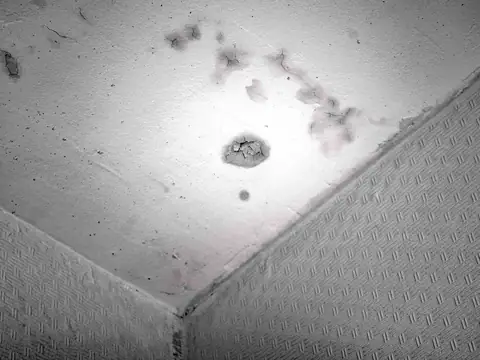
A brown ring that appears and stays dry is still worth a moisture reading. Water may have soaked the cavity and stopped, or the leak may only run when someone upstairs showers. Either way the ceiling is wetter inside than it looks.

Where ceiling leaks in New York buildings come from
Knowing the likely source tells you who to call and, later, who pays. The common ones in city apartments:
| Where it starts | What you usually see | Who to tell first |
|---|---|---|
| A bathroom above: tub, toilet, shower pan, grout | A stain or drip under the bathroom, often worse after someone showers | The neighbor above, then the super |
| A kitchen above: dishwasher, sink, washing machine hose | Sudden heavy water, often during the day | The neighbor above, then the super |
| A riser or line pipe in the wall | Water in several apartments in the same line, stains near a corner or a pipe chase | The super or managing agent at once |
| A radiator or heating pipe | Water or rust stains near where a radiator sits upstairs, often when the heat comes on | The super |
| The top of the building or the facade | A stain on a top-floor ceiling or an outside wall after heavy rain | The super or managing agent |
| Your own apartment | A stain near your own bathroom or an air conditioner sleeve | A plumber, or the super if it is a building pipe |
The trade standard for water damage work, the IICRC S500, says that finding and correcting the cause of the water is the property owner’s job, not the restoration company’s. That is why most ceiling leaks are two jobs: the building’s staff or a plumber stops the leak, and the restoration provider dries and repairs the ceiling. If the source is a pipe hidden in a wall, the page on leak detection in NYC explains how it is traced.
Who to tell, and in what order
In a building, you are rarely the only person who needs to know. Tell people in this order and keep a note of when you told them:
- The neighbor above. They may not know their apartment is leaking.
- The super or the managing agent. They can shut water to the line, get into an empty unit and start the building’s own incident record.
- The board or the landlord, through the managing agent. In a co-op or condo the managing agent usually passes it on. In a rental, the landlord.
- Your own insurer, if you have a policy. Check your own policy or ask your agent what they need and how soon.
If you rent
New York City’s Health Department says owners of buildings with three or more apartments are required to keep tenants’ homes free of mold, and that this includes safely repairing underlying problems like water leaks. Local Law 55 of 2018 puts the same duty on those owners. HPD tells tenants that if they observe a leak, they should notify the landlord, and if the landlord does not fix the hazard, or the repair is not being done safely, file a complaint online or call 311. Keep your photos and the dates you reported it.
If you own a co-op or condo apartment
Who repairs the ceiling, and who pays, is set out mainly in your building’s own documents: the proprietary lease in a co-op, the declaration and by-laws in a condo, though the city’s housing code can still put some repairs on a co-op corporation. Ask the managing agent for the section on repairs and for the incident report, and get the plumber’s note on the source in writing. Those three papers are what a board, a neighbor or an insurer will ask to see.
How a ceiling leak is repaired properly
A quick patch over a wet ceiling is the most common mistake in apartment repairs. The stain comes back, the paint peels, and the cavity above can stay damp long enough to grow mold. A sound repair runs in this order:
- The leak is stopped and confirmed stopped. Ideally someone runs the fixture upstairs while the provider watches.
- The wet area is mapped. A moisture meter shows how far the water spread above the ceiling, which is usually well beyond the stain. A thermal camera can help show the outline.
- The cavity is opened if needed. A ceiling that sagged, or one with soaked insulation above it, is cut back so air can reach the joists. A small, neat opening now saves a bigger one later.
- It is dried. Air movers and a dehumidifier run in the room. EPA’s guidance is to dry water-damaged areas and items within 24 to 48 hours to prevent mold growth, which is why drying starts as soon as the leak is stopped.
- Readings are taken until it is dry. Not until it looks dry: until the meter says so.
- Then the repair. New drywall or a plaster patch, joint compound, a stain-blocking primer and paint to match.


Plaster ceilings in pre-war buildings
Many pre-war buildings have plaster on lath or plaster on metal lath rather than drywall. Plaster can survive a soaking if it stays attached, but a section that has let go of its lath, cracks in a spider pattern or sounds hollow when tapped usually has to come down. Ask the provider how they plan to match the surface: a skim coat over new board, or a plaster patch.
Light fixtures and smoke detectors in the ceiling
Water that ran through a fixture box has been around the wiring. Leave the circuit off until an electrician has checked it. The same goes for a hard-wired smoke detector that got wet: it is a safety device, and it has to work.
Common mistakes after a ceiling leak
- Painting over the stain while the ceiling is still damp. The stain can come back, and EPA says moldy surfaces should not be painted over.
- Waiting to see if it dries on its own. A cavity with insulation above can stay wet long after the room feels dry.
- Throwing out damaged things before photographing them. The building, the neighbor and an insurer will all want to see them.
- Letting the repair start before the source is found. If the leak runs again, the new ceiling gets wet too.
- Ignoring a smell. A musty smell weeks later points to moisture still trapped. The page on mold remediation in NYC explains the city’s rules if mold appears.
When the ceiling leak is part of a bigger job
If water also ran down the walls and across the floor, the job is a full drying and repair, explained on the page about water damage restoration in NYC. If there is standing water on the floor right now, see emergency water removal. And if the water came from outside the building, through a street, a sewer or a flooded yard, that is a flood rather than a leak, and the first steps are different.
Ceiling still dripping? Send the request and a local provider can contact you.
Questions people ask
What do I do if there is a leak in my ceiling?
Go upstairs, tell the super, switch off power to anything wet from a dry spot, catch the water, and photograph everything. Keep everyone out from under a bulge and leave it to the super or the provider. Then have the ceiling dried and checked with a moisture meter before it is patched.
Is a ceiling leak an emergency in an apartment?
Treat it as one if the ceiling is dripping hard, sagging or near a light fixture. Keep everyone out from under it and switch that circuit off. A dry old stain can wait for a proper look.
I have a water mark on my ceiling but no leak. What causes it?
Often a leak that only runs sometimes, such as when someone showers upstairs, or a leak that stopped but left the cavity wet. A moisture reading tells you whether water is still there.
Who pays for a ceiling leak from the apartment above?
It depends on where the leak started and on your building’s documents. Ask the managing agent for the section on repairs, the incident report and the plumber’s note on the source. Check your own policy or ask your agent about insurance.
Can I report a ceiling leak to 311?
Tenants should tell the landlord first. HPD says that if the landlord does not fix a leak, or the repair is not being done safely, a tenant can file a complaint online or call 311.
Is this site the company that repairs the ceiling?
No. NYC Water Damage Repair is an independent referral service. Your details go to an independent local restoration provider, who quotes any work directly. You decide whether to hire them.
Water coming in?
Tell us where it is coming from and a local provider can contact you.
NYC Water Damage RepairFive boroughs